



When comparing anxiety attack vs panic attack, the main difference is often how symptoms begin. Panic attacks start suddenly, while anxiety may build gradually around ongoing worries. ‘Anxiety attack’ is an informal term, so its onset, triggers, and duration can vary.
Clinicians define a panic attack as an abrupt episode of intense fear or discomfort. People often use ‘anxiety attack’ to describe moments when worry becomes overwhelming. The symptoms can overlap, and both experiences can be distressing. A GP or psychologist can help you understand your symptoms and discuss support.
Panic Attack vs Anxiety Attack at a Glance
| Feature | Panic Attack | “Anxiety Attack” (Everyday Term) |
| Clinical status | A recognised clinical event | An everyday phrase, not a formal diagnosis |
| Onset | Often sudden, sometimes peaking within around 10 minutes | Usually builds up gradually |
| Typical triggers | Can be unexpected, or linked to a clear trigger | Often tied to work stress or a particular worry |
| Typical duration | According to the NHS claustrophobia guidance, most panic attacks last 5–30 minutes, although duration varies | No fixed length. Can run for extended periods. |
| Main experience | Sudden fear, sometimes with fear of dying or losing control. | Overwhelming feelings of worry and tension. |
| Common physical sensations | Rapid heartbeat, shortness of breath, shaking, chest tightness. | Muscle tension, restlessness, stomach discomfort. |
| What often follows | Fear of another attack, or avoiding certain places. | Ongoing worry while the stressor stays around. |
A lot of these symptoms show up on both sides. A rapid heartbeat alone won’t tell you which one you had. Treat this table as a general guide rather than a diagnosis, since everyone’s experience is a little different.
What Is a Panic Attack?
A panic attack is a sudden episode of fear that can involve strong physical symptoms.
Your heart might start pounding within seconds, followed by breathlessness, dizziness, or shaking. Some people feel disconnected from their own body.
For others, the fear itself takes over. For a few minutes, they’re convinced something terrible, like dying or losing control, is happening.
Panic attack symptoms don’t always need an obvious trigger. Unexpected panic attacks happen for a lot of people with no warning at all. Others experience panic that follows something stressful they’d already been dreading.
One episode on its own doesn’t mean someone has panic disorder.
What Is an Anxiety Attack?
Heightened anxiety often builds gradually, although people use “anxiety attack” differently. There’s often no apparent cause you can point to straight away. A morning concern can still sit in someone’s chest by the afternoon. It can bring racing thoughts and stomach distress that are hard to shake off. Hot flushes and a tight jaw can show up too.
Because the term isn’t standardised, a mental health professional usually asks what happened. They don’t rely on the label itself. They also check whether a wider pattern, such as generalised anxiety disorder, might explain it.
What Panic and Anxiety Attacks Have in Common
Anxiety and panic can both activate the body’s fight-or-flight response, as Better Health Channel explains. Stress hormones are released, speeding up heart rate and breathing even when there’s no real danger. Unlike panic attacks, an anxiety attack usually gives more warning as it builds. The physical sensations can still feel identical either way.
Noticing the symptoms can also create a second layer of worry. A GP visit can help rule out an underlying condition.
How Do Onset, Triggers and Duration Differ?
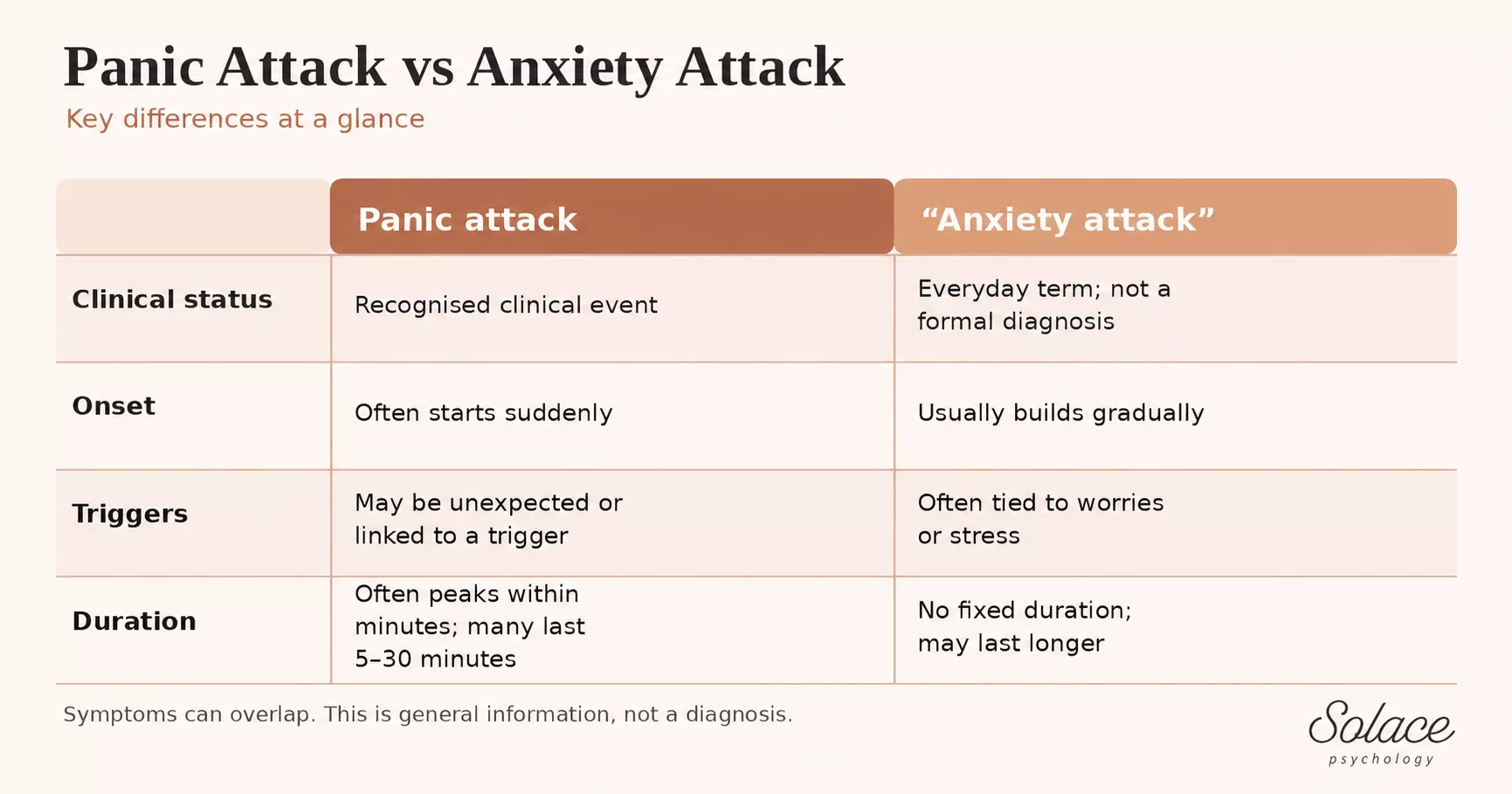
The key difference is speed. NHS claustrophobia guidance notes that panic attack symptoms usually peak within ten minutes. Anxiety can persist for longer, as outlined by Medicare Mental Health.
Onset and Triggers
Panic often feels like it comes out of nowhere, even when someone was already on edge. Ongoing anxiety usually has something more specific behind it, like work stress or a conversation someone has been avoiding. It can ease while they’re distracted, then return once their mind drifts back to it.
Peak and Duration
Many panic attacks settle within 5 to 30 minutes, though some run longer. Fear of having another one can linger afterwards.
Anxiety doesn’t tend to follow the same timeline. Because “anxiety attack” was never clinically defined, how long it lasts can vary a lot. It can stretch across hours or days.
Healthdirect’s guide to panic attacks and panic disorder explains why duration alone can’t tell you what’s going on. If something feels wrong, it’s worth getting checked rather than waiting to see how long it lasts.
Panic Attack vs Panic Disorder: What Is the Difference?
A panic attack is a single episode. Panic disorder, like other mental health disorders, is assessed as a pattern rather than from one event. It develops when attacks recur unexpectedly.
No single cause explains why panic disorder develops. Mayo Clinic lists family history and major life stress as risk factors for panic attacks or panic disorder. It often first appears in early adulthood, though it can start at any age. Diagnosis also considers at least one month of ongoing concern or behaviour changes following an attack. A mental health professional can help determine whether an experience fits this pattern, rather than someone guessing on their own.
“Anxiety Attack” Is Not an Official Diagnosis, But the Experience Is Real
A phrase doesn’t need an official name to count.
If you’re unsure whether you had an anxiety attack or a panic attack, that’s fine. You don’t need to settle it before reaching out. Describing what happened, roughly when it started, and how long it lasted is enough to start.
When Should You Get Medical Help?
Treat new chest pain, trouble breathing, or simply not knowing what’s happening to your body as urgent.
Solace Psychology is not an emergency service. Call triple zero (000) straight away if symptoms are severe, getting worse, or feel life-threatening. Panic symptoms and heart problems can be hard to tell apart in the moment. A past panic attack doesn’t rule out a serious illness or medical condition happening now.
For milder or ongoing concerns, see your GP to check for physical causes. They can also talk through what to do next.
When Might It Help to See a Psychologist?

It can help to see a psychologist when attacks keep recurring. It can also help when fear of them starts changing everyday life.
That might look like worrying ahead about the next attack, or avoiding places tied to a past episode. It can also mean noticing sleep, focus, or work starting to slip. Distress that sticks around after a GP has ruled out a health concern is also worth following up.
Your whole life doesn’t need to be affected before this is worth raising. Solace Psychology offers evidence-based care, tailored to your needs and circumstances. No referral is required to book. You may book a consultation anytime you feel ready.
If symptoms seem familiar to you, you can also read about psychological support for panic attacks.
Anxiety counselling, delivered through evidence-based therapy, can also help with the ongoing worry that sits between episodes. Your GP can talk through whether seeing a psychologist or psychiatrist is the right next step.
Frequently Asked Questions
How Long Can an Anxiety Attack Last?
Can You Have a Panic Attack and an Anxiety Attack at the Same Time?
Is an Anxiety Attack an Official Diagnosis?
Can a Panic Attack Feel Like a Heart Attack?
Is It Normal to Cry During a Panic Attack?
Talk With a Psychologist About Panic Attacks
Anxiety attack vs panic attack label is secondary. Getting the right assessment is a helpful first step.
You can talk with Solace Psychology even without knowing exactly what to call your experience. Book an appointment to talk through what’s been happening and the support available to you. No referral is required.