



The main difference between stress vs anxiety is the trigger. Stress usually responds to an external pressure, like a deadline or a hard week. Anxiety is an internal worry or fear that may continue even when that pressure has passed.
Stress often eases once the demand is over. Anxiety can linger and may lead you to avoid people, places or tasks. Both can cause tension, poor sleep and a racing mind, so they are easy to mix up.
This guide is not a diagnostic tool. If you need support, our Client Support team can help match you with a psychologist.
Stress and Anxiety Can Feel Similar
Stress and anxiety can both affect your thoughts, body, emotions and behaviour. Their causes, duration and effects vary between people, so a psychologist in Melbourne may consider your wider circumstances rather than relying on one symptom.
Trauma-informed care can also help explore whether past experiences, current demands or other concerns contribute to how you feel.
A Quick Stress vs Anxiety Comparison
| Area | Stress | Anxiety |
| Trigger | Often connected to an identifiable external trigger | May occur without one clear external trigger. Trigger is likely to be internal, like a thought or a body sensation. |
| Duration | May ease when the demand passes | May persist after circumstances change |
| Thoughts | Often focus on a current problem | May involve ongoing fear of a future scenario whether real or imagined |
| Physical sensations | May include tension, headaches or fatigue | May include tension, restlessness or panic sensations |
| Daily impact | Can reduce concentration and energy | Can lead to avoidance or disrupt routines |
These are common patterns, not fixed rules. Culturally sensitive care considers how identity, community, relationships and life circumstances shape each person’s experience.
Source note: This comparison draws on guidance from the American Psychological Association and should be interpreted within a broader clinical assessment.
What Stress May Look Like
Stress is a mind-body response to demands, change or perceived pressure.
Contributors may include deadlines, caring responsibilities, financial pressure, conflict, health concerns and major life changes. Possible signs include irritability, muscle tension, headaches, sleep changes, poor concentration and feeling emotionally drained, especially when simple tasks begin to feel monumental.
Everyday Example: A Clear External Pressure
Someone approaching a demanding work deadline may feel tense, distracted and unable to sleep well, then experience relief after submitting the work. Improvement after a stressor resolves is one possible pattern rather than a rule.
Healthdirect’s stress guidance provides further information about common stress experiences. Brief coping tools, including the 3-3-3 rule described below, may help some people manage difficult moments.
What Anxiety May Look Like
Anxiety is a normal protective response, but it may become distressing when persistent worry, fear, physical arousal or avoidance feels disproportionate to the situation. Experiences can include hypervigilance, restlessness, constant tension and panic sensations.
Anxiety may occur alongside stress, trauma, depression, obsessive-compulsive concerns or life transitions. As Beyond Blue explains, diagnosis requires more than identifying symptoms from a list.
Everyday Example: Worry That Continues
After resolving a work problem, someone may continue worrying that they missed something, chose the wrong solution, that their colleagues view them negatively or that they will lose their job. Solace Psychology’s experienced, compassionate team of psychologists can explore the context, patterns and impact without assuming a diagnosis.
Key Differences Between the Two
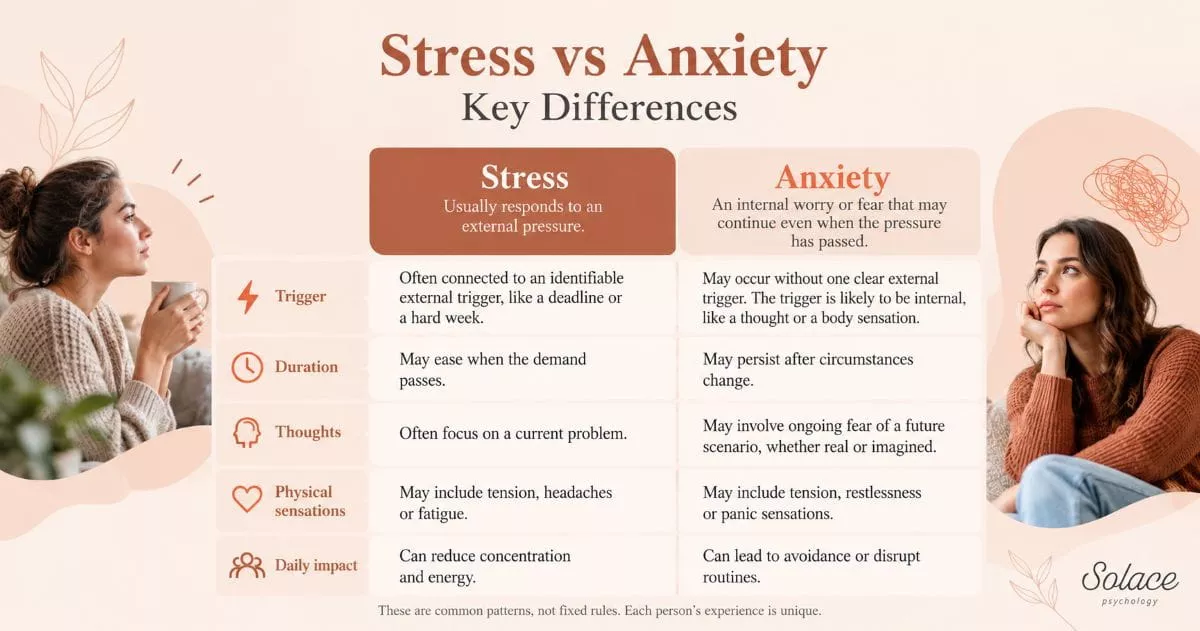
Stress often has a recognisable demand, while anxiety may continue after that demand changes or arise without one clear trigger. Both can be brief or persistent, but ongoing distress, avoidance and disruption deserve attention.
Both can involve the body’s survival response: fear can activate hormones such as adrenaline and cortisol, and a flight response can bring rapid or shallow breathing and a faster heart rate. A fight response may involve tension in the jaw, neck, stomach or shoulders, which can feel urgent.
The difference between stress and anxiety is not always clear-cut, and neither reflects personal failure.
Evidence-based therapeutic approaches, including cognitive behavioural therapy (CBT), acceptance and commitment therapy (ACT), eye movement desensitisation and reprocessing (EMDR), Schema Therapy and dialectical behaviour therapy (DBT), may be considered according to individual needs.
Why the Overlap Matters
Perfectly labelling every feeling may be less useful than noticing what happens, what appears to trigger it and how it affects your life. Our care can help you focus on your support needs rather than deciding whether your experience is “serious enough”.
Practical Ways to Respond to Stress and Anxiety
You might pause and engage in grounding strategies, maintain regular sleep and meal routines where possible, move gently, reduce avoidable demands or talk with someone you trust. For a practical stressor, identify one next step, such as clarifying a deadline or requesting support.
During anxiety, try noticing the fast or frantic pace of your thoughts and the way sensations move in your body without automatically treating them as signs of threat. These strategies are not cures or substitutes for care, but they can complement support delivered in an LGBTQIA+ inclusive care, confidential, judgement-free space.
The 3-3-3 Grounding Exercise
Name three things you can see, three things you can hear and move three parts of your body. This grounding exercise may reconnect you with the present, although it will not suit everyone and is not a diagnostic or treatment tool.
Solace Psychology’s Client Support team can answer questions and assist with psychologist matching when self-guided strategies are insufficient.
When It May Help to Speak With a Psychologist

Consider support if distress persists, becomes difficult to manage, causes avoidance or affects daily functioning, including work, study, relationships, sleep or routines. Panic symptoms, escalating worry, burnout, disconnection or difficulty completing everyday tasks are also reasonable concerns to discuss.
You can learn more about anxiety counselling in Melbourne or ask Solace Psychology about its resource on when to see a psychologist. If you are at immediate risk of harm, contact emergency services or an appropriate crisis service urgently.
What You Can Discuss in an Initial Appointment
You can bring examples of current pressures, worries, physical sensations, sleep changes, avoidance and effects on everyday life. The first conversation can explore your goals, relevant history, strengths and suitable support, forming the basis for therapeutic plans tailored to your goals and life situation.
Frequently Asked Questions
How Do I Know if It Is Anxiety or Stress?
What Is the 3-3-3 Rule for Anxiety?
Notice three things you can see, three you can hear and move three parts of your body. It may provide brief grounding, but it does not replace professional support when distress persists.
What Are Five Warning Signs of Stress?
Possible signs include ongoing tension, irritability, sleep changes, difficulty concentrating and feeling overwhelmed. Because these experiences can have many causes, consult a qualified healthcare professional if they persist or disrupt daily life.
Do I Need a Referral to See a Psychologist for Stress or Anxiety?
No, you do not need a referral to book an appointment. If you have a valid Mental Health Care Plan, you may be eligible for Medicare rebates. Our Client Support team can answer questions about availability.
Is Solace Psychology an Emergency Service?
No, Solace Psychology is not an emergency service and cannot provide urgent or crisis support. If you are at immediate risk of harm, contact emergency services or an appropriate crisis service straight away. Our psychologists can support ongoing concerns such as stress and anxiety.
Personalised Stress and Anxiety Support With Solace Psychology
Solace Psychology provides psychological therapy for youth, adults, couples and families experiencing stress, burnout, anxiety and related concerns. We offer evidence-based care with CBT, ACT, EMDR, Schema Therapy and DBT when clinically appropriate.
In-person appointments are available in Carlton North, Coburg and Kew East, alongside telehealth. Contact the Client Support team to discuss current availability, ask questions or find a psychologist whose experience and therapeutic style fit your circumstances.