



Learn how it works, when to use it, and when you may need extra support.
How to Use the 3-3-3 Rule Step by Step
- Pause and notice. As soon as you feel your chest tighten or your thoughts begin to race, stop for a moment. Don’t fight the feeling. Just notice what’s happening.
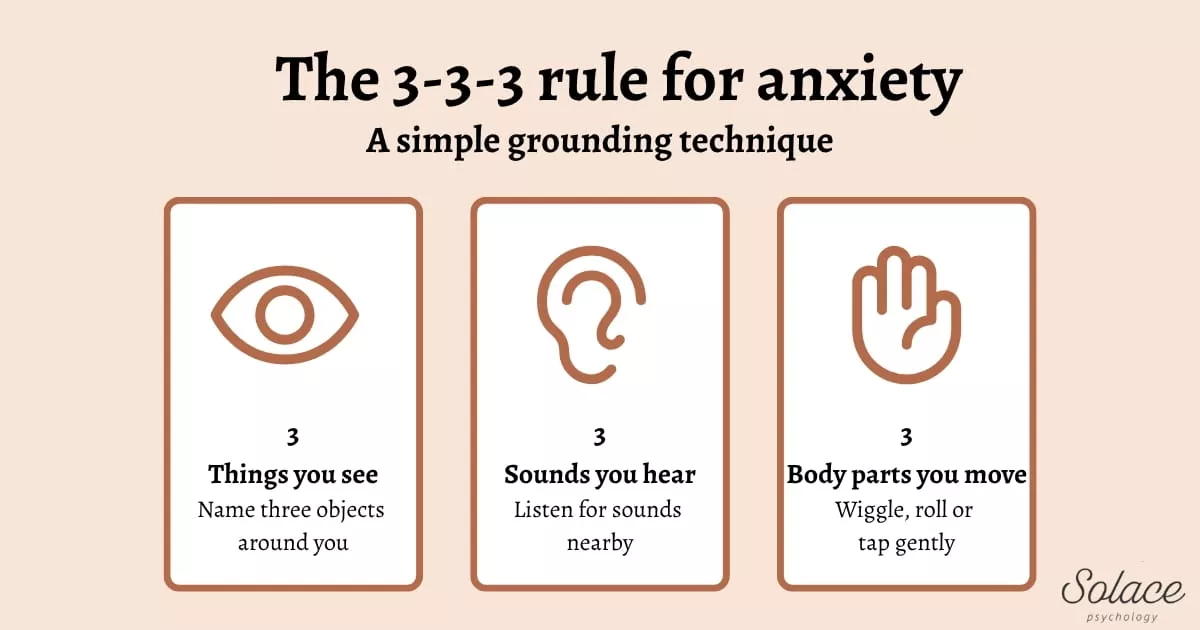
- Name three things you can see. Look around you and identify three objects. It could be a lamp, a coffee cup or a picture frame. Say each one slowly, either out loud or in your head.
- Name three sounds you can hear. Listen to the sounds around you. You might hear traffic, a fan, birds or your own breathing. This shifts your focus away from anxious thoughts.
- Move three parts of your body. Wiggle your fingers, roll your shoulders or tap your feet on the floor. Small movements help reconnect you with your body.
- Take one slow breath. Although not part of the original method, taking one slow breath before moving on can help your body settle.
- Check in with yourself. Ask yourself if you feel even slightly calmer. If not, repeat the steps once more without rushing.
- Return to what you were doing. Your anxiety doesn’t need to disappear before you continue. The goal is to feel grounded enough to move forward.
Each step uses a different sense to bring your attention back to the present. Anxiety often traps you in racing thoughts, while this technique helps reconnect you with your surroundings.
You can use it almost anywhere, whether you’re on a tram, at work or waiting in line at a Carlton North café.
To get the most from the 3-3-3 rule:
- Slow down instead of rushing through each step.
- Spend a few seconds noticing what you can see, hear and feel.
- Don’t expect your anxiety to disappear straight away.
- Focus on feeling a little calmer rather than completely calm.
- Keep the steps on your phone for easy access.
- Practise the technique during calm moments so it feels familiar when you need it.
Many people notice their breathing slows, their heart rate settles, or their thoughts become easier to manage after completing the exercise. Small changes like these are a sign the technique is helping you regain your focus.
If you find yourself relying on the 3-3-3 rule several times a day, it may be a sign you need more support than a grounding exercise alone can provide.
Using the 3-3-3 Rule During a Panic Attack vs. Everyday Anxiety
The 3-3-3 rule can help during both panic attacks and everyday anxiety. But the way you use it should match the moment.
Knowing the difference can make the technique more effective.
During a panic attack, your body may feel overwhelmed. Your heart races, your chest tightens, and your thoughts can quickly spiral. In these moments, the 3-3-3 rule acts as a grounding tool that helps bring your attention back to your surroundings.
Move through each step slowly. Name each object and sound with care, and don’t rush the movements. If you’re in a public place, such as a café or waiting for a tram in Carlton North, you can complete the exercise quietly in your head.
Everyday anxiety often feels different.
It usually builds more gradually and may show up as constant worry before a meeting, a difficult conversation, or another stressful event. Here, the 3-3-3 rule works as a gentle reset that helps you refocus before anxiety takes over.
A simple way to remember when to use it is:
- Panic attack: Slow down, repeat the steps if needed, and pair them with slow breathing.
- Everyday anxiety: Use the steps once to interrupt racing thoughts and regain focus.
- Anticipatory anxiety: Try the exercise just before a stressful event to help you feel more present.
Don’t expect the exercise to stop a panic attack straight away. Its purpose is to help you stay connected to the present until the intensity begins to ease. Even a small shift in focus can make the experience feel more manageable.
If the 3-3-3 rule doesn’t seem to help, or panic attacks are becoming more frequent, it may be time to look beyond grounding exercises alone. They are designed to manage the moment, not address the underlying causes of anxiety.
Working with a psychologist through Anxiety Counselling or CBT Therapy can help you understand the thoughts and behaviours that keep anxiety going.
Over time, this can reduce how often you rely on grounding techniques and build more lasting ways to manage anxiety.
Why the 3-3-3 Rule Stops Working Over Time
The 3-3-3 rule can be helpful during anxious moments, but it isn’t designed to manage anxiety on its own. If you rely on it often, you may notice it becomes less effective over time.
One reason is that your brain gets used to the routine. A grounding exercise that once felt calming can become familiar, making it harder to shift your focus in the same way.
Another reason is that the 3-3-3 rule only helps with the moment you’re in. It doesn’t address the thoughts, habits or life events contributing to your anxiety. If those patterns stay the same, the anxiety often returns.
You may also find the technique becomes less helpful if:
- Anxiety changes from occasional spikes to constant worry.
- Stress from work, relationships or major life changes builds over time.
- You rely on grounding exercises without addressing the underlying causes.
- The routine becomes so familiar that it no longer holds your attention.
This doesn’t mean the 3-3-3 rule has failed. It simply means you may need more than a grounding exercise to manage ongoing anxiety.
Many people find that grounding techniques work best alongside evidence-based therapy. While the 3-3-3 rule helps you through a difficult moment, therapy focuses on the thinking patterns and behaviours that keep anxiety going.
If you often feel stuck in the same cycle, Anxiety Counselling or CBT Therapy can help you understand what’s driving your anxiety and develop practical ways to manage it over time.
Keep using the 3-3-3 rule when it helps. Just remember that it’s one tool, not a complete treatment plan.
If anxiety is affecting your daily life, getting professional support is an important next step.
When Grounding Techniques Aren’t Enough

The 3-3-3 rule for anxiety is a simple way to feel more grounded during stressful moments. While it can help you manage anxiety in the short term, it isn’t designed to replace ongoing support.
If anxiety is affecting your work, relationships or daily life, speaking with a psychologist can help you build practical strategies for lasting change.
Frequently Asked Questions
How do I know if the 3-3-3 rule is enough, or if I need more help?
You may need more help if you’re using the 3-3-3 rule several times a day, avoiding places or situations because of anxiety, or having frequent panic attacks. The technique is designed to help during anxious moments, not treat ongoing anxiety. Anxiety Counselling or CBT Therapy can help address the causes of anxiety as well as the symptoms.
Can I use the 3-3-3 rule anywhere, or do I need a quiet space?
Yes, you can use the 3-3-3 rule almost anywhere. It works at home, at work, on public transport, or while waiting in line.
You only need a few things to see, hear and move. The key is slowing down and giving each step your full attention.
Is the 3-3-3 rule different for panic attacks and everyday anxiety?
Yes, the 3-3-3 rule works slightly differently for panic attacks and everyday anxiety. During a panic attack, move through each step slowly and repeat the exercise if needed. For everyday anxiety, one round is often enough to interrupt racing thoughts and help you refocus.
Why does the 3-3-3 rule stop working over time?
The 3-3-3 rule can become less effective over time if you rely on it alone. While it helps you manage anxious moments, it doesn’t address the thoughts, habits or situations that keep anxiety going. If anxiety continues to return, it may be time to seek professional support.
Is the 3-3-3 rule the same as mindfulness?
How long should I spend on each step?
Ready to Talk to Someone?
We’re here when you’re ready. Get in touch today.