


People used to frown upon discussions on mental health. Gradually, we’ve come to understand that shedding light on this issue is integral to shaping policies and interventions that help those in need.
Bringing together the latest available statistics on anxiety in Melbourne, this article uses national and Victorian data. Though these figures are limited, they reflect how anxiety is reported in population surveys.
As you read through, keep these points in mind:
- These verifiable data are sourced from Australian government agencies and recognised mental health organisations, namely the Australian Bureau of Statistics (ABS), the Australian Institute of Health and Welfare (AIHW), Beyond Blue, and SafeWork Australia.
- These results are based on the survey design, sample size, and reporting period.
- Estimates, projections, or assumptions have not been applied.
- Victoria-level and national surveys are used where Melbourne-specific figures are unavailable.
- As surveys rely on self-reported information, responses reflect personal experiences at the time of data collection.
- The information is only descriptive and doesn’t provide diagnoses, treatment advice, or predictions.
- Sources precede the list of statistics to avoid repetition and confusion.
This resource can be used as a reference for reporting, research, and policy discussion.
Key Statistics at a Glance: Anxiety in Melbourne
Source: Australian Bureau of Statistics (ABS), National Study of Mental Health and Wellbeing (2020-2022).
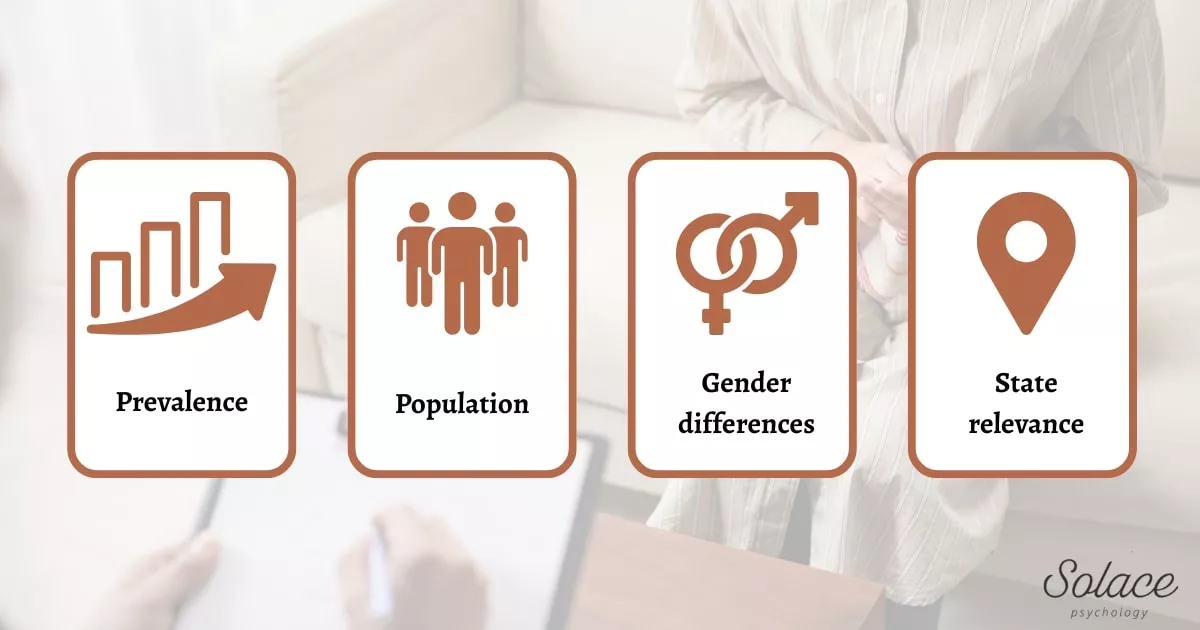
- In 2020-2022, 17.2% or 3.4 million Australians aged 16-85 reported a 12-month anxiety disorder.
- Among mental disorders, anxiety disorders were the most commonly reported in Australia.
- The highest anxiety prevalence was observed among people aged 16-24.
- Females reported higher 12-month anxiety prevalence compared with males (21.1% compared with 13.3%).
- 17.4% of Victorians aged 16-85 had a 12-month anxiety disorder.
Source: Australian Institute of Health and Welfare (AIHW), Australian Burden of Disease Study (2024).
- Anxiety disorders ranked fourth for total disease burden in Australia.
These headline figures are commonly cited in public reporting. They provide a snapshot rather than a complete picture. Later sections break these findings down by age, workplace context, and service use.
Prevalence of Anxiety Disorders
Source: Australian Bureau of Statistics (ABS), National Study of Mental Health and Wellbeing (2020-2022).
- Lifetime anxiety prevalence in Australia was reported at 28.8%.
- No other mental disorder group had a higher lifetime prevalence than anxiety disorders.
Lifetime prevalence reflects whether anxiety was reported at any point, not current symptoms. Twelve-month figures capture more recent experiences. Both measures are used to describe different aspects of prevalence.
- Anxiety disorders exceeded affective disorders in prevalence across adult age groups.
- Anxiety disorders were more common than substance-use disorders across adult age groups.
- The largest share of 12-month mental disorders was attributed to anxiety disorders.
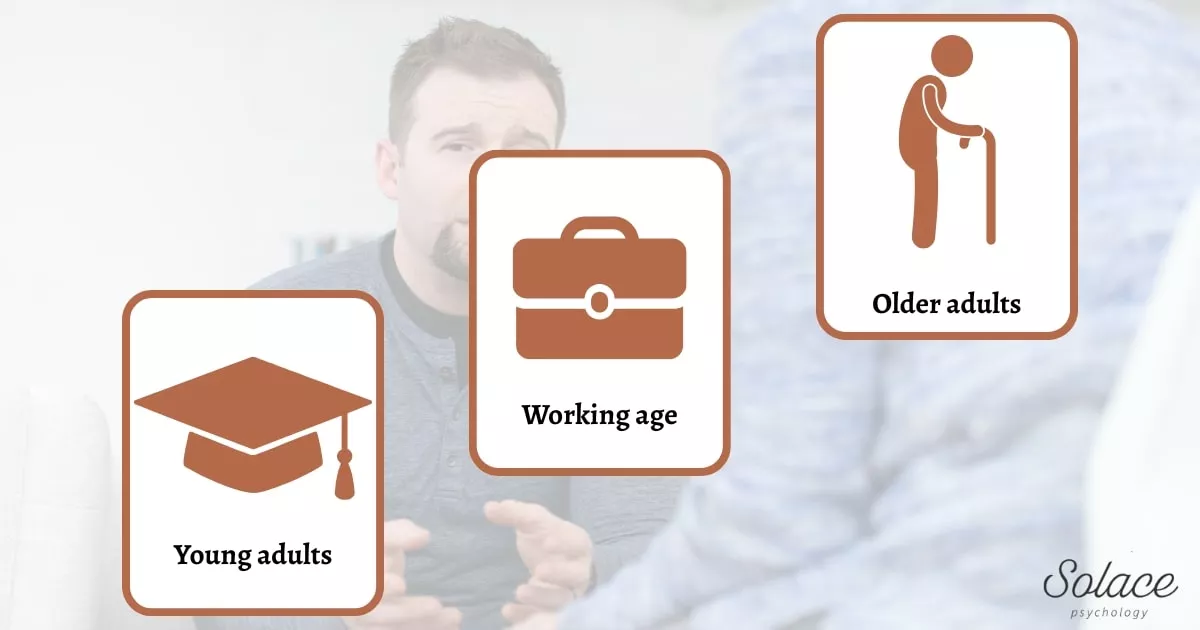
- Anxiety prevalence was higher among adults aged 16-34 than among those aged 35-64.
- Among working-age adults, anxiety disorders were the most reported mental disorder.
- Anxiety disorders were the most reported mental disorder among both males and females.
- More adults reported anxiety than any other mental disorder in the past year.
Source: Australian Institute of Health and Welfare (AIHW), Multimorbidity in Australia (2022).
- Anxiety was among the most reported long-term health conditions in Australia.
Anxiety Statistics by Age Group
Source: Australian Bureau of Statistics (ABS), National Study of Mental Health and Wellbeing (2020-2022).
- Among people aged 16-24, 31.8% reported a 12-month anxiety disorder.
- 40.4% of females aged 16-24 had a 12-month anxiety disorder.
- 24.4% of males aged 16-24 had a 12-month anxiety disorder.
- 38.8% of people aged 16-24 experienced any mental disorder in 12 months.
Younger age groups report higher anxiety prevalence in national surveys. This pattern has been observed across multiple survey periods. Rates tend to decline with increasing age.
- Anxiety prevalence remained high among people aged 25-34.
- Lower rates were reported among people aged 35-44.
- Further declines were reported among people aged 45-54.
- A lower prevalence was reported among individuals aged 55-64.
- Lower rates were reported among people aged 65-74.
- People aged 75-85 recorded the lowest anxiety prevalence.
Workplace Anxiety and Work-Related Mental Health
Source: Safe Work Australia, Psychological Health in Australian Workplaces (2022).
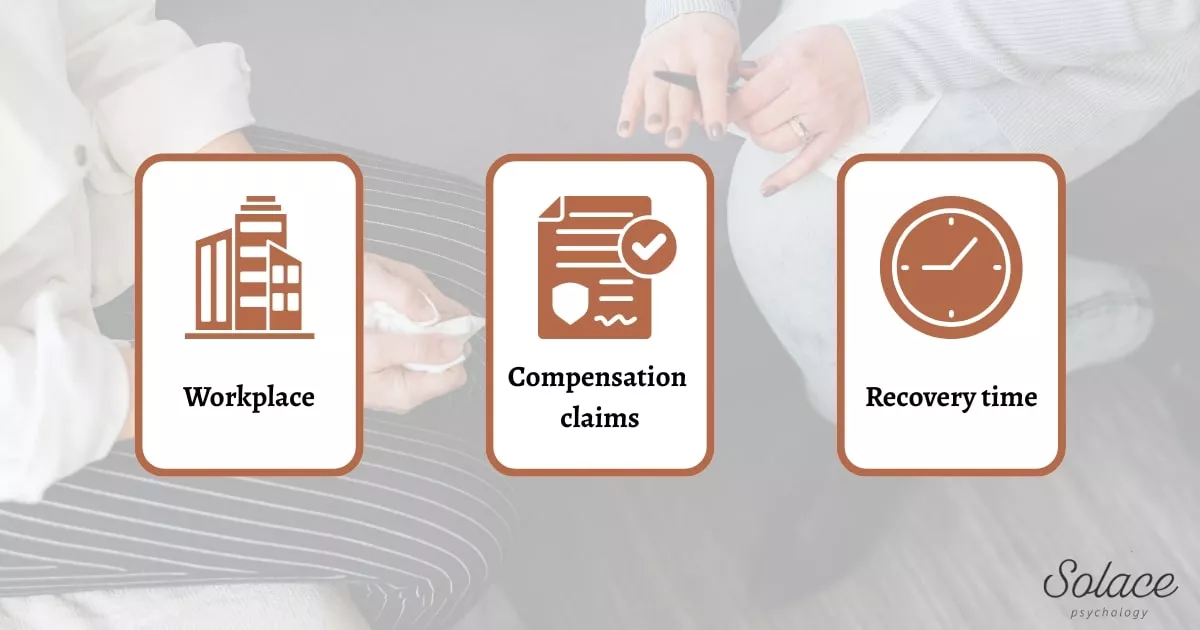
- 45.8% of mental health compensation claims involved anxiety and stress disorders.
- Mental health conditions accounted for 9% of serious compensation claims.
- Mental health claims increased by 36.9% between 2017–18 and 2021–22.
Worker’s compensation data reflects accepted claims only. Not all work-related mental health conditions result in a claim. These figures likely understate the total workplace impact.
- Anxiety and stress disorders were the most common mental health claim type.
- Mental health claims were associated with longer recovery periods than physical injuries.
- Extended work absence was more common in mental health claims.
Anxiety, Cost of Living, and Urban Pressures
Financial and housing pressure are reported alongside mental distress in surveys. These factors are included for context. The data does not measure direct cause.
Source: Beyond Blue, Australia’s Mental Health and Well-being Check (2024).
- 46% of Australians identified financial pressure as a key factor in their mental well-being.
- Housing affordability was often reported alongside mental distress.
- Reported distress increased among people experiencing multiple life stressors.
Anxiety and Help-Seeking Behaviour
Access to support varies among people experiencing anxiety. These statistics describe how Australians access care.
Source: Australian Bureau of Statistics (ABS), National Study of Mental Health and Wellbeing (2020-2022).
- 17.4% of Australians saw a health professional for mental health support.
- Among people with a mental health disorder, 45.1% reported seeking professional support.
Help-seeking patterns differ by age, gender, and access to care. Some people seek informal support instead of professional care. Survey results reflect reported behaviour, not unmet need.
- Females were more likely than males to seek mental health support.
- Young adults were more likely to seek support than older adults.
- At 35.5%, general practitioners were the most common initial contact.
Source: Beyond Blue, Australia’s Mental Health and Wellbeing Check (2024).
- Common barriers included waitlists, cost, and low perceived need.
Anxiety Trends Heading Into 2026
- Survey data show higher anxiety prevalence than reported in 2007.
Long-term comparisons rely on consistent survey questions. Changes over time may reflect both prevalence and reporting practices. Trend data should be interpreted cautiously.
- Larger increases were observed among people aged 16-24.
- Social phobia increased from 4.7% to 7.3%.
- Agoraphobia increased from 2.8% to 4.5%.
Source: Australian Institute of Health and Welfare (AIHW), Australian Burden of Disease Study (2024).
- Anxiety disorders increased as a share of the total mental disorder burden.
- Anxiety remained a leading cause of non-fatal health burden.
Together, these sections show how anxiety data is reported across different contexts.
Conclusion
Taken together, the statistics indicate that anxiety remains common across Australia. The patterns are relevant to large urban areas like Melbourne. These statistics inform ongoing public understanding. They also indicate how anxiety treatment should be accessible.
While local data varies, national and state findings provide helpful context. They help explain prevalence, age differences, workplace impact, and help-seeking behaviour.
Accurate, well-contextualised data remains essential for public discussion.
References
- Australian Bureau of Statistics (ABS).
National Study of Mental Health and Wellbeing. 2020-2022. - Australian Bureau of Statistics (ABS).
National Study of Mental Health and Wellbeing – State and Territory Tables. 2020-2022. - Australian Institute of Health and Welfare (AIHW).
Australian Burden of Disease Study. 2024. - Australian Institute of Health and Welfare (AIHW).
Multimorbidity in Australia. 2022. - Beyond Blue.
Australia’s Mental Health and Wellbeing Check. 2024. - Beyond Blue.
Australians Are More Stressed and Need Your Support. 2024. - Safe Work Australia.
Psychological Health in Australian Workplaces. 2022. - National Mental Health Commission.
National Report Card on Mental Health and Suicide Prevention. 2023.